
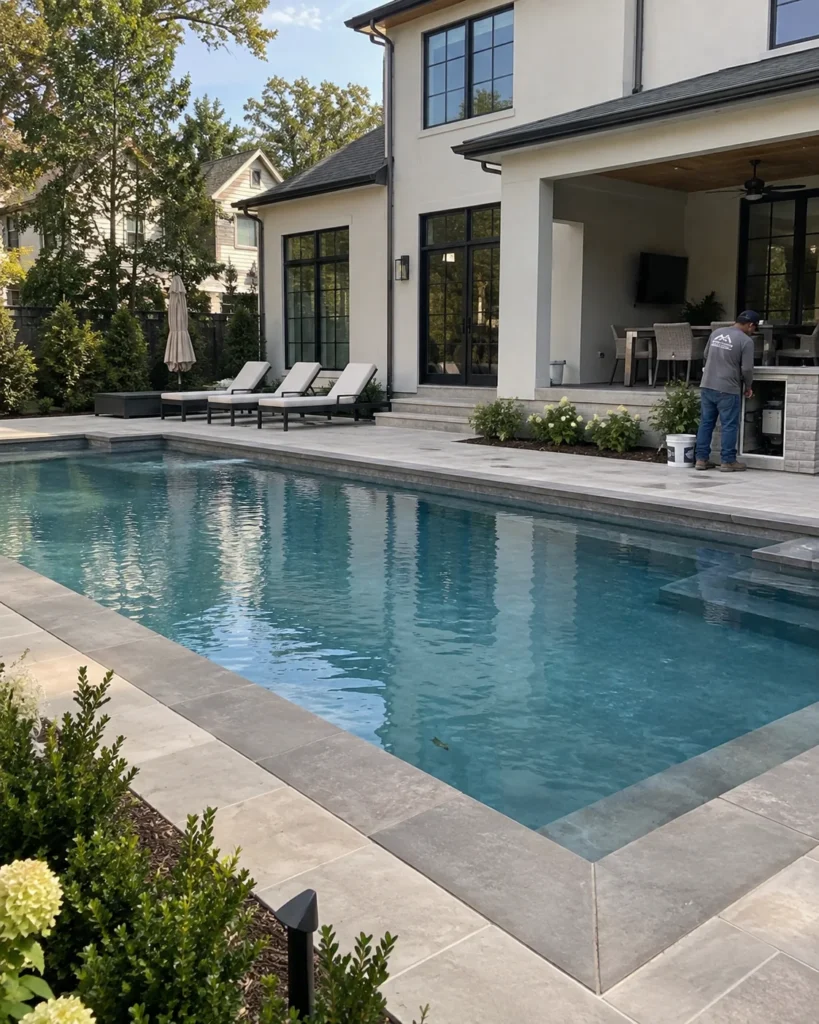
Pool resurfacing, tile replacement and coping work describe different parts of a pool. They may belong in one renovation, but one item should not be assumed to include the others. The first planning task is to identify which surfaces or components are involved and what condition needs investigation.
This guide focuses on an existing concrete pool with a cementitious interior finish. A vinyl-lined or fiberglass pool needs a different material-specific discussion. In every case, a photograph can help explain the concern, but it cannot establish the complete renovation scope.
What does pool resurfacing address?
Resurfacing concerns the pool’s interior finish: the surface seen and felt inside the vessel. When discussing it, identify the existing finish if known and ask which preparation and replacement system the proposal includes.
The National Plasterers Council explains that cementitious finish performance involves materials, application, startup and continuing water care. Its guidance on chemical etching is one reason appearance alone should not be used to assign a cause. Read the NPC finish-deterioration guidance.
For the assessment, describe whether the concern is texture, visible wear, discoloration, cracking or another observation. Note where it appears and when you first noticed it. Separate those observations from a proposed remedy: “rough area near the steps” is useful information; “the entire shell has failed” is a diagnosis that needs evidence.
How are waterline tile and coping different?
Waterline tile is the tiled band around the pool near the water surface. Coping is the finished edge around the top of the pool. A proposal can address one, both or neither, depending on the condition and the agreed design.
Ask the estimator to mark those components separately on photographs or a sketch. Identify which areas are being retained and what happens at the transition between old and new work. This avoids discovering later that “pool renovation” meant only the interior finish while you expected a new perimeter appearance.
Tile work also involves the assembly behind the visible pieces. LATICRETE’s pool design manual discusses the role of movement joints and the need to accommodate movement in pool tile and stone installations. Review the manufacturer’s pool design manual. Ask what investigation is needed if the concern may extend beyond a finish or individual tile.
Must all three components be renovated together?
There is no useful universal answer from the project name alone. Ask whether retaining one component is compatible with the proposed work and whether it creates limitations at a transition. The assessment should explain why a combined scope is recommended rather than treating it as an automatic package.
It can help to request a base scope and clearly separated options. For example, the base might address the assessed problem, while an option changes additional finishes for appearance. Those are different reasons for spending money and should be visible in the decision.
Also ask about sequencing. If one component will be changed later, what work would need to be disturbed again? A phased plan should explain those consequences before you select materials, without promising that every part can always be retained.
What information should you collect before an assessment?
Gather any record of the pool’s construction, previous resurfacing, product selections and recent service history. Include photographs of the full pool and close-ups of the concern. Existing water-care records may also help the professional understand the history.
Write down whether you want to solve a condition problem, change the appearance or update equipment as a separate part of the project. Do not allow those objectives to merge into one vague line item. Equipment work should be explicitly included or excluded.
Leave draining decisions, material preparation and system work to the qualified professionals responsible for the project. A planning visit should determine what investigation is appropriate; this article is not a draining, chemical-treatment or repair procedure.
What should the proposal and handover include?
Ask for the finish, tile and coping selections to be identified clearly, together with the areas included, preparation assumptions and exclusions. Confirm how newly discovered conditions will be documented and approved. Product samples should be discussed alongside the actual installation scope.
The handover needs attention too. Who manages startup, provides care instructions and confirms when the pool may return to use? NPC treats startup and continuing maintenance as part of its technical guidance, so they should not disappear from the conversation when the visible work is finished. See NPC’s technical resources.
Confirm any required approvals with the municipal construction office for the specific work proposed. NJ DCA’s permit resources are a starting point, not a project-specific permit determination.
Compare defined scopes, not renovation labels
A clear proposal tells you what is happening to the interior finish, waterline tile, coping and any separately included equipment. It also tells you what remains and what still needs assessment. That makes an option easier to evaluate than a broad promise to make the pool look new.
Explore swimming pool installation and renovation to review the pool scopes and check the work and location.