
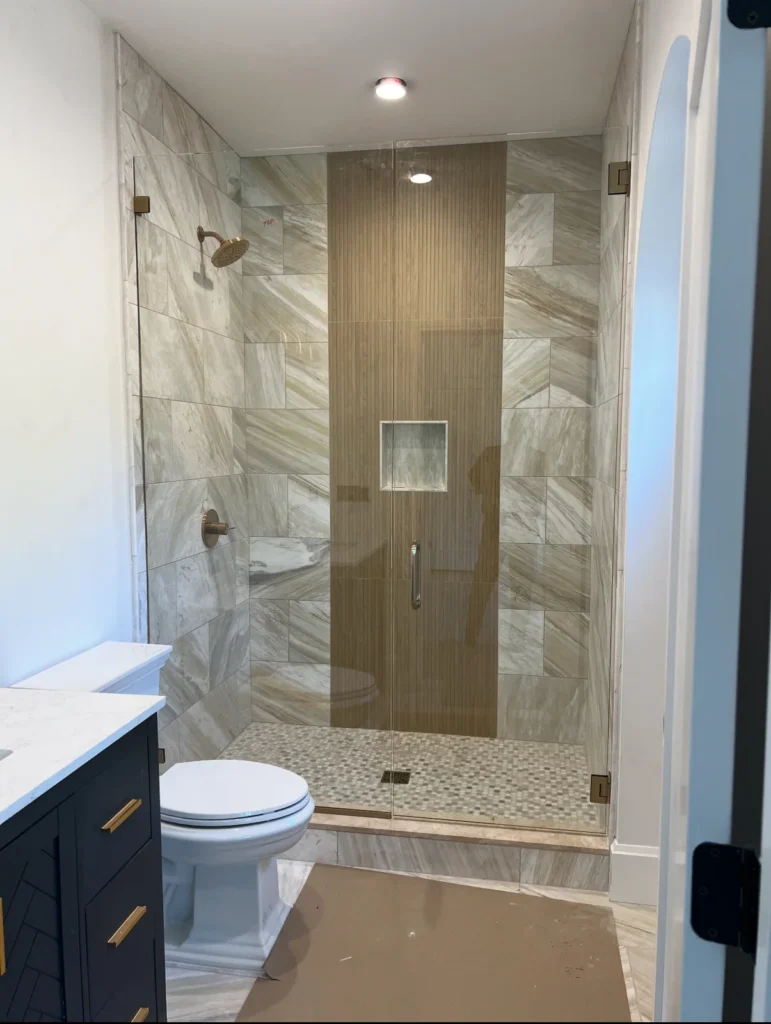
A focused bathroom update is a reasonable option when the existing shower performs well and the changes are elsewhere, such as a vanity or the room’s flooring. A shower with recurring leaks, damaged surrounding materials or unresolved performance problems needs assessment before you choose a cosmetic fix. The decision turns on what needs attention beneath and around the finish, not just how old the tile looks.
Separate two lists: what you dislike visually, and what does not function as expected. That keeps an unattractive but serviceable finish from being confused with an underlying problem.
Start with the actual symptom
Describe what happens in plain language. Is there water outside the enclosure after use? Is a ceiling below stained? Are finishes loose? Is the complaint limited to cleaning effort or an outdated appearance? Note when it occurs and take photographs from a safe, accessible position.
Do not label every symptom “bad grout.” That assumes a cause before it has been established. Ask what needs inspection and whether the concern involves the fixture, enclosure, connections, drainage or the shower assembly.
Likewise, record whether the room remains humid after use. EPA’s indoor-air guidance explains the role of outdoor-exhausting bathroom ventilation and moisture control. A room-level ventilation concern deserves its own question rather than being bundled silently into a tile choice.
Understand what a shower finish does and does not tell you
Tile is the visible surface of a layered assembly. Schluter’s waterproofing guidance explains why tile and grout alone should not be treated as the waterproofing system. A new-looking surface therefore does not establish the condition of everything behind it.
If you are considering new shower tile, ask what will be removed, what will remain and how the proposed work addresses the existing waterproofing. The useful answer is specific to the materials and condition, not a universal promise that one layer can always be changed independently.
Request an explanation of how the proposed assembly will be detailed and checked according to the selected system’s instructions. This is a scope question for the people assessing and installing the work; it is not a reason for a homeowner to improvise a repair method from a general article.
Compare a focused update with shower remodeling
If the shower is staying, list that explicitly in a vanity or bathroom flooring project. Ask how it will be protected and what the new work will meet at its edges. A clear boundary prevents “update the bathroom” from being interpreted differently by each person preparing a proposal.
If the shower itself is being remodeled, group the decisions that belong together: the base, wall surfaces, fixtures, enclosure and the interfaces between them. Identify what is already selected and what needs investigation. Do not use a fixture shopping list as a substitute for describing the underlying work.
Compare the options using these questions:
- Which problem does this option actually address?
- Which existing components are being retained, and on what basis?
- What assessment is still needed before a final scope can be stated?
- What adjacent finishes may be disturbed?
- What happens if removal reveals different conditions?
- What care and maintenance will the selected materials require?
Ask for photos or a written description of the proposed system where that helps you understand the answer. Product documentation can clarify what is specified, but a manufacturer’s general description is not evidence that a particular existing shower is sound.
Choose fixtures after understanding the constraints
Check product specifications before selecting a showerhead or other fixture solely for its appearance. Confirm compatibility with the proposed installation and identify who is responsible for making that check.
For showerhead efficiency, the EPA WaterSense label includes performance testing as well as water-efficiency criteria. It can help compare labeled products, but it does not diagnose the plumbing conditions in your home or guarantee how an individual installation will feel.
Additional questions about the decision
Does a new enclosure require a complete shower remodel?
Not automatically. The existing surfaces, support, dimensions and installation details need to be assessed for the proposed enclosure. Ask for a clear statement of what can stay and what must change.
Should I order extra tile?
Ask the installer or supplier to determine the appropriate quantity for the pattern, cuts and any future spare material you want. Keep the product and batch information with the project records.
Can matching tile guarantee an invisible partial change?
No. A product name alone does not settle differences in batch, age, wear or installation. Ask what the finished transition is expected to look like before choosing a partial scope.
Use the bathroom planning checklist for the rest of the room. Explore Jaggerworks bathroom and shower remodeling services to review the listed project categories.