
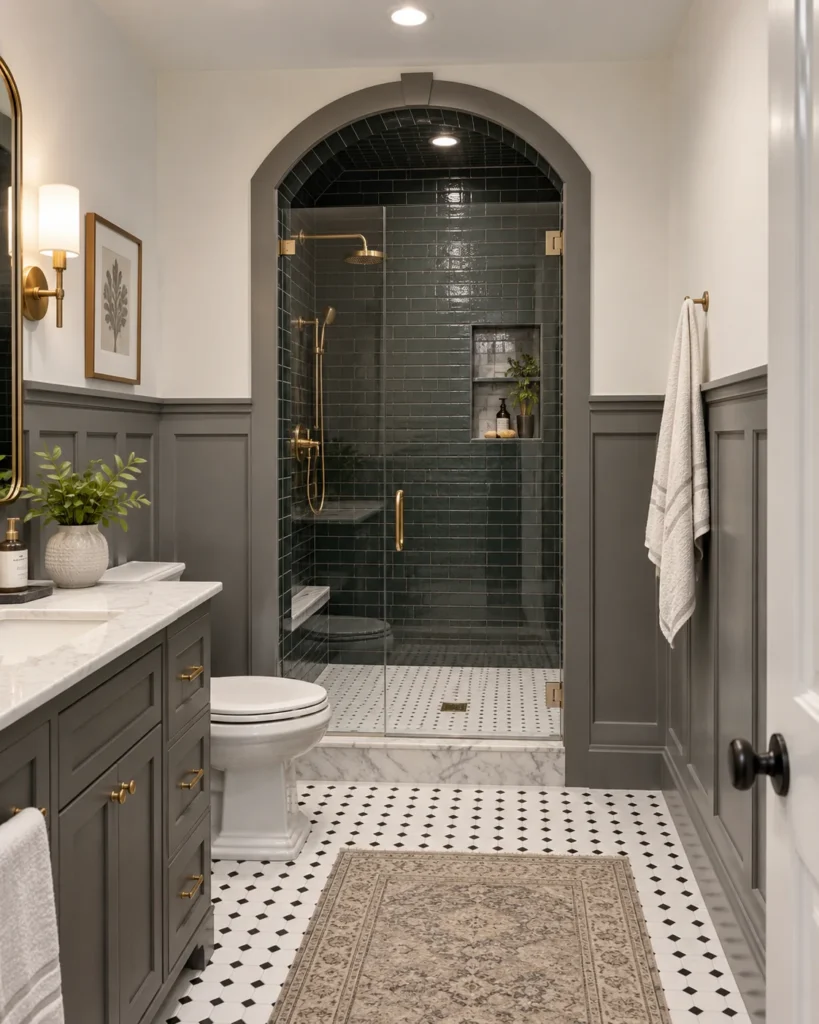
Before choosing bathroom tile, decide what the room needs to do, which fixtures will remain and whether any existing problems need investigation. Those decisions establish the scope. Finishes come next, because a tile you like cannot resolve an unsuitable fixture, an unexplained leak or a room that will be difficult to use during construction.
Start with a one-page brief. You can refine it as information becomes available; it does not need to be a finished design before it becomes useful.
Write down how the bathroom is actually used
Identify who uses the room, how often and what causes friction. A primary bathroom shared every morning has different priorities from a guest bathroom used occasionally. Note storage needs, cleaning preferences and which existing fixtures you want to retain.
- What is the most important improvement: the shower, tub, vanity, floor or the whole room?
- What works well enough to keep?
- Which finishes are simply disliked, and which are damaged?
- What would make the completed room easier to maintain?
- Is this the home’s only bathroom?
Rank the answers instead of making every preference equally important. When a selection exceeds the budget or does not fit, priorities give you a rational way to choose an alternative.
Document conditions before covering them
Photograph stains, loose finishes and areas that stay damp. Record when you notice the problem and whether it follows shower use or another event. These observations help define questions for an assessment; they are not a diagnosis.
Ventilation belongs in the planning conversation. EPA explains that bathroom fans exhausting outdoors help ventilation. Note whether the room has an exhaust fan and ask how its route and operation will be evaluated if relevant to the project.
A tiled shower also needs more consideration than its visible finish. Schluter explains that tile and grout alone are not waterproof. Ask what existing assembly is being retained or replaced before treating shower tile as an isolated decorating purchase.
For a home built before 1978, identify potential painted-surface disturbance early. EPA’s renovation guidance describes the lead-dust concern and lead-safe planning. Do not assume that a small room makes preparation irrelevant.
Choose fixtures with their surrounding work in mind
A vanity selection should include its actual dimensions and product information, not only a screenshot of the finish. The same applies to a tub, shower fixture or other selected item. Ask how the proposed product relates to existing connections, adjacent finishes and installation access.
For each item, mark who supplies it and whether it is selected, shortlisted or undecided. Ask who confirms compatibility before ordering. Keep alternatives identified if a preferred product is unavailable, but do not substitute without confirming the effect on the rest of the plan.
Bring material samples together where possible. Evaluate how they look in the room’s lighting, and read the product’s use and care information. A showroom image tells you little about whether you will enjoy maintaining a particular surface.
Plan household use and a clear written scope
Ask which fixtures will be unavailable, what determines when they can return to use and how unfinished areas will be separated from daily activity. Do not assume a temporary arrangement is possible simply because part of the room is being retained.
For a New Jersey property, confirm the proposed work and applicable approvals with the municipal construction office. Record who is responsible for the relevant steps. The answer depends on the actual work; an online bathroom checklist cannot approve a particular project.
The FTC advises putting the work and materials in writing. Your bathroom proposal should also make its exclusions and undecided selections understandable. If moisture damage or other concealed conditions are found, ask how the work would pause for documentation and approval of a revised scope.
Other bathroom planning questions
Should I choose matching finishes from one collection?
That is a design preference, not a substitute for checking specifications. Confirm dimensions, intended use, care requirements and availability for each item even when the products share a collection name.
What information is useful if I cannot find old plans?
Current photographs, known product labels, a list of previous repairs and a clear description of the problems are still useful. Identify approximate measurements as approximate so they are not mistaken for verified dimensions.
How should I plan if this is the only bathroom?
Raise that at the start and ask what access can realistically remain during each stage. Establish an alternative arrangement before work begins rather than relying on an assumed daily return to service.
If the main question concerns the wet area, read shower remodeling versus a focused bathroom update. Explore Jaggerworks bathroom remodeling services for the listed room and fixture categories.